
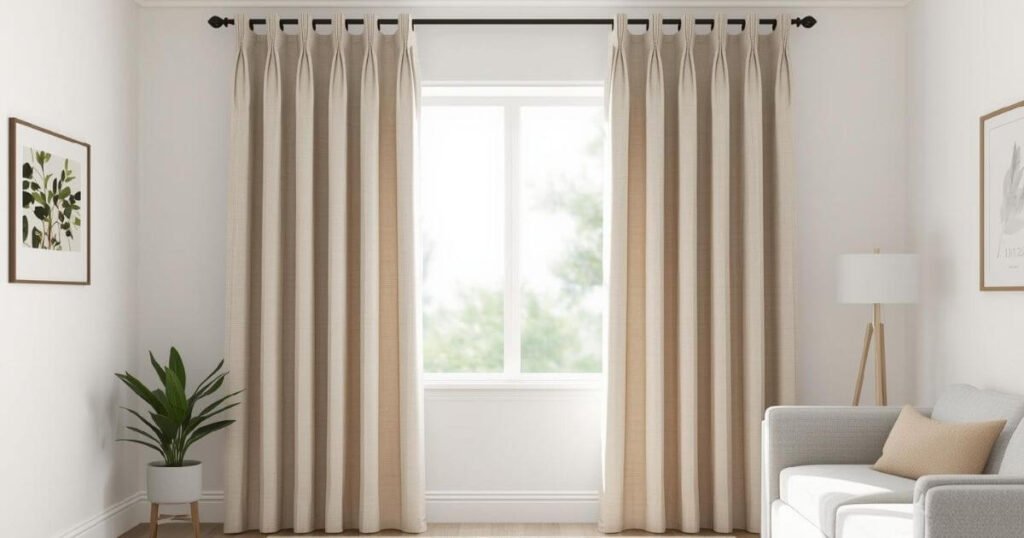
Have you ever bought curtains that looked amazing online, but once you hung them, they felt messy, uneven, or just wrong?
This is one of the most common problems homeowners face—and it’s exactly where pinch pleat curtains make a real difference.
This guide is written to solve real confusion around pinch pleat curtains:
how they look, how they work, how to measure them, how to hang them, and how to choose the right type for your home—without sounding technical or overwhelming.
Table of Contents
ToggleWhat Is a Pinch Pleat Curtain? (Simple Definition)

A pinch pleat curtain is a curtain where the fabric at the top is folded, pinched, and stitched together to form neat pleats. These pleats stay in place and help the curtain hang evenly from top to bottom.
You may also hear them called:
pinch pleated curtains
pinch pleat drapes
pinch pleated drapery
pinch pleat heading curtains
All mean the same thing: structured, tailored curtain pleats that look clean and balanced.
What Do Pinch Pleat Curtains Look Like in Real Life?

Pinch pleat curtains have:
Evenly spaced pleats
Soft vertical folds
Flat panels between pleats
A tailored, finished appearance
Unlike casual styles, they don’t bunch up or twist when you open or close them.
That’s why they’re often used in living rooms, bedrooms, dining rooms, and formal spaces.
Many people ask:
Are pinch pleat curtains old fashioned?
Are pinch pleat curtains modern?
The answer is both.
Traditional homes use classic pinch pleated drapery, while modern homes use Euro pleats, inverted pleats, or tailored pleat styles for a clean look.
Why Do So Many People Struggle With Curtains—and How Pinch Pleats Fix It
The Real Problem
Most curtain problems come from:
Wrong width
Poor fullness
Uneven hanging
Fabric not falling straight
How Pinch Pleat Curtains Help
Pinch pleat curtains:
Control fullness at the top
Distribute fabric evenly
Keep panels hanging flat
Make windows look taller and wider
This is why designers often recommend pinch pleat curtains for floor-length drapery panels and large windows.
Different Types of Pinch Pleat Curtains (Explained Simply)

Single Pinch Pleat Curtains
One small pleat per section
Light, minimal look
Best for small windows or modern spaces
Double Pinch Pleat (Two-Finger Pleat)
Two folds pinched together
Balanced and popular
Works well in living rooms and bedrooms
Triple Pinch Pleat (Three-Finger Pleat)
Fuller, richer appearance
Often used in formal window treatments
Ideal for wide or tall windows
Euro / Parisian Pleat
Unstructured modern pleat
Soft V-shaped folds
Very popular in modern pinch pleat curtains
Inverted Pinch Pleat
Pleats fold inward
Clean and tailored
Great for minimalist homes
Pinch Pleat Curtains vs Other Curtain Styles (Quick Clarity)
People often compare before choosing. Here’s the real difference:
Pinch pleat vs pencil pleat curtains
Pinch pleats are structured; pencil pleats gather randomly.Pinch pleat vs eyelet/grommet curtains
Eyelets slide easily but look casual. Pinch pleats look polished.Pinch pleat vs back tab curtains
Back tabs hide hardware but don’t control fullness.Pinch pleat vs wave or ripple fold curtains
Wave styles are modern but need special tracks.
Pinch pleat curtains are the most balanced option between style and function.
Do Pinch Pleat Curtains Use More Fabric? (Honest Answer)
Yes—but for a good reason.
Because the fabric is folded into pleats, pinch pleat curtains need more width than flat panels.
This extra fabric creates:
Better drape
Smoother folds
A luxury finish
This is where fullness ratio for pinch pleat curtains matters.
How Much Fabric Do Pinch Pleat Curtains Need?
Most pinch pleat curtains use:
2x to 2.5x fullness
Example:
If your window is 60 inches wide, you’ll need:
120–150 inches of fabric width
This fullness keeps the pleats looking full even when curtains are closed.
How to Measure for Pinch Pleat Curtains (No Confusion)

Width
Measure the curtain rod or track width
Multiply by your fullness ratio
Length
Measure from:
Rod or track → floor
Or sill → floor (your choice)
Always measure finished curtain length, not fabric length.
How to Hang Pinch Pleat Curtains (Step-by-Step Feel)
Pinch pleat curtains use hooks or pins, not holes.
You’ll need:
Pinch pleat hooks
Curtain rings or a track
Drapery pins inserted into pleats
You can hang them:
On a rod with rings
On a curtain track
On traverse track systems
Yes—pinch pleat curtains can go on a track, and they slide very smoothly.
“Pinch pleat curtains are a timeless choice within elegant curtain top styles.”
Where to Put Hooks on Pinch Pleat Curtains

Hooks go:
Inside the stitched pleats
At equal heights for even hanging
Slightly adjustable for length control
This makes pinch pleat curtains easier to level than many other styles.
Can You Make Pinch Pleat Curtains at Home?
Yes—many people do.
You can:
Use pinch pleat tape
Use buckram
Create DIY pinch pleat curtains
Even make no-sew pinch pleat curtains with tape
DIY works best for:
Cotton
Linen
Lightweight curtain fabric
Heavy fabrics like velvet are harder but possible.
Best Fabric Choices for Pinch Pleat Curtains
Pinch pleats work beautifully with:
Linen pinch pleat curtains
Cotton pinch pleat curtains
Velvet pinch pleat curtains
Silk and satin draperies
Sheer pinch pleat curtains layered underneath
Heavyweight fabrics create a formal look, while lightweight fabrics feel casual and airy.
Pinch Pleat Curtains in Real Rooms

Living Room
Floor-to-ceiling pinch pleat curtains
Layered over sheers
Makes the space feel taller
Bedroom
Blackout pinch pleat curtains
Better light control and privacy
Dining Room
Double or triple pinch pleats
Adds elegance without clutter
Sliding Doors
Pinch pleat curtains on track systems
Smooth opening, full coverage
Pinch Pleat Curtains vs Tie Top Curtains
Pinch pleat curtains have stitched pleats that create a clean, structured look and help curtains hang evenly. Tie top curtains use fabric ties, giving a softer, more casual feel. If you want a polished and balanced window style, pinch pleats work best. For relaxed or cozy spaces, tie top curtains are a simpler choice.
A Client Example (Problem → Solution)
A homeowner had wide living room windows and used eyelet curtains.
The problem:
Curtains looked flat
Fabric bunched unevenly
Window looked shorter
The solution:
Switched to double pinch pleat curtains
Used a 2.5x fullness ratio
Hung them floor-length on a track
The result:
Even pleats
Smooth folds
Window appeared taller and more balanced
No décor changes—just the right curtain structure.
Why Pinch Pleat Curtains Still Matter Today
Pinch pleat curtains aren’t about trends.
They’re about control, balance, and long-term satisfaction.
If you want curtains that:
Hang properly
Look intentional
Stay neat for years
Then pinch pleat curtains quietly solve problems most people don’t realize they have—until they switch.
Find elegant curtain designs and home décor at Biyadecor.
Conclusion:
Pinch pleat curtains quietly solve many of the problems people face with window treatments—uneven hanging, messy folds, poor fullness, and curtains that never look quite right. Their structured pleats create balance, help fabric fall smoothly, and make windows appear taller and more finished without feeling heavy or outdated.
Whether used in a living room, bedroom, dining space, or over sliding doors, pinch pleat curtains offer a dependable combination of style, function, and long-term satisfaction. With proper measuring, the right fullness ratio, and suitable fabric, they adapt beautifully to both traditional and modern interiors. For homeowners who want curtains that look intentional every single day, pinch pleat curtains remain one of the most practical and timeless choices.
Frequently Asked Questions About Pinch Pleat Curtains
1. Are pinch pleat curtains old fashioned or still in style?
Pinch pleat curtains are very much in style. While they originated in traditional interiors, modern versions like Euro pleats and inverted pinch pleats give them a clean, updated look that works well in contemporary homes.
2. Do pinch pleat curtains use more fabric than regular curtains?
Yes, pinch pleat curtains use more fabric because the pleats require extra width. This added fabric creates better fullness, smoother folds, and a more polished appearance when the curtains are closed.
3. Can pinch pleat curtains be hung on a track instead of a rod?
Absolutely. Pinch pleat curtains work extremely well on curtain tracks, including traverse track systems. They slide smoothly and maintain even spacing across the window.
4. How wide should pinch pleat curtains be for a window?
Most pinch pleat curtains need a fullness ratio of about 2 to 2.5 times the window or track width. This ensures the pleats stay full and the panels don’t look flat when closed.
5. Are pinch pleat curtains difficult to hang?
Not at all. Once hooks are inserted into the pleats, hanging pinch pleat curtains is straightforward. The hooks also allow small height adjustments, making it easier to level the curtains perfectly.
6. Can I convert existing curtains into pinch pleat curtains?
In many cases, yes. Pencil pleat or flat curtain panels can often be converted using pinch pleat tape or buckram, as long as there is enough fabric width to create proper pleats.