
Table of Contents
ToggleWhat Are Café Curtains? Definition, Uses, Types, Pros, Costs & Buying Guide
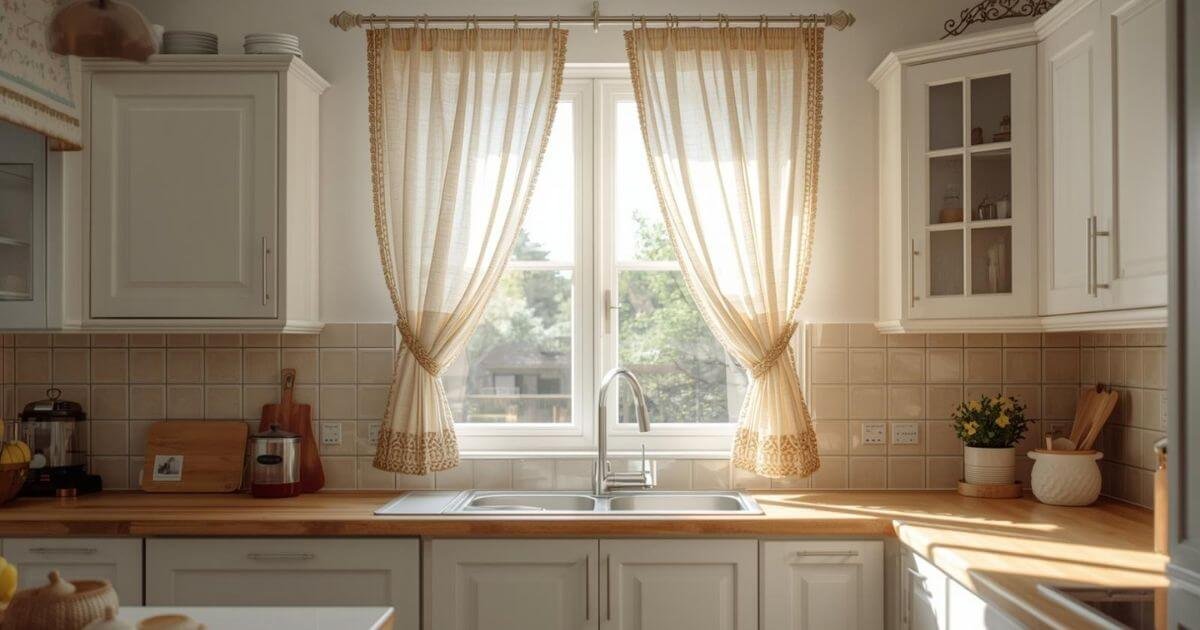
What Are Café Curtains?
Café curtains are short window curtains designed to cover only the lower half of a window. They leave the top portion uncovered, allowing natural light to flow in while providing privacy at eye level. You’ll most often see them in kitchens, cafés, bathrooms, and street-facing rooms where full curtains would feel heavy or unnecessary.
The concept comes from European café style, where ground-floor windows needed discretion without blocking daylight. Over time, café curtains became a popular window treatment in homes that value both function and charm.
In simple terms: café curtains sit halfway up the window, filter light, soften the space, and protect privacy—without closing the room off.
Why Café Curtains Matter in Home Design

Café curtains solve a specific design problem: how to balance privacy and natural light.
Many homes—especially apartments, kitchens, and older houses—have windows that face streets, neighbors, or shared spaces. Full-length curtains can make these rooms feel dark or cramped. Café curtains offer a middle ground.
They matter because they:
Let sunlight brighten the room
Prevent outsiders from seeing directly inside
Add warmth and character without visual bulk
Work well in smaller or casual spaces
For people worried about curtains looking outdated or blocking light, café curtains are often the smartest compromise.
Where Café Curtains Are Commonly Used

Café curtains work best in rooms where light is essential but privacy is still needed.
Most Common Spaces
Kitchens: Especially over sinks or counters
Bathrooms: Often paired with frosted glass
Breakfast nooks: Cozy, informal seating areas
Dining corners: For soft daylight without glare
Street-facing living rooms: Lower privacy without darkness
They’re also popular in cafés, bakeries, and small restaurants—places that inspired their name in the first place.
Types of Café Curtains
Café curtains come in several styles, each suited to different needs and décor preferences.

Tier Café Curtains
These consist of two separate panels, often sold as a set. You can adjust fullness or replace just one tier if needed. This is the most common café curtain style.
Single-Panel Café Curtains
A single piece of fabric across the window. This option creates a cleaner, more minimal look and works well in modern kitchens.
Sheer Café Curtains
Made from voile or lightweight fabric, these prioritize light over privacy. Best for decorative use or rooms that aren’t directly visible from outside.
Lace Café Curtains
Often associated with vintage, farmhouse, or traditional interiors. Lace filters light beautifully while adding texture and pattern.
Patterned or Printed Café Curtains
Gingham, florals, stripes, or subtle motifs. These add personality and are popular in cottage-style or country kitchens.
Café Curtains vs Other Window Treatments

Choosing the right window treatment often means understanding how café curtains compare to other options.
| Feature | Café Curtains | Full-Length Curtains | Valances | Blinds |
|---|---|---|---|---|
| Coverage | Lower half only | Full window | Top only | Full window |
| Light Control | High | Adjustable | High | Adjustable |
| Privacy | Partial | Full | Minimal | Full |
| Best For | Kitchens, cafés | Bedrooms, living rooms | Decorative layering | Offices, bathrooms |
Café curtains are not a replacement for every curtain type—but they excel where light and openness matter most.
How Café Curtains Work (Installation Explained)
Installing café curtains is straightforward and usually doesn’t require professional help.
Basic Installation Steps
Measure the width of your window
Decide the hanging height (usually mid-window)
Install a café rod or tension rod
Slide the curtain panel(s) onto the rod
Adjust gathers for even fullness
How High Should Café Curtains Be Hung?
Most café curtains are hung at the midpoint of the window or slightly lower, depending on sightlines and privacy needs. Hanging them too high defeats their purpose; too low can look awkward.
Fabrics, Materials & Opacity Levels
The fabric you choose directly affects how café curtains look and function.
Common Fabrics
Cotton (easy care, casual look)
Linen (textured, breathable, natural)
Voile (sheer and airy)
Lace (decorative and traditional)
Polyester blends (durable and budget-friendly)
Opacity Options
Sheer: Maximum light, minimal privacy
Semi-sheer: Balanced light and privacy
Lightweight opaque: More privacy without heaviness
Do Café Curtains Provide Privacy at Night?

This is one of the most common concerns—and an important one.
Café curtains do provide daytime privacy, especially when outside light is brighter than inside. At night, however, interior lighting can make silhouettes visible.
To improve nighttime privacy:
Choose semi-sheer or lightly opaque fabric
Combine café curtains with blinds or shades
Avoid placing them in rooms requiring full privacy
Pros and Cons of Café Curtains
Pros
Allow natural light to enter
Affordable and widely available
Easy to install and replace
Ideal for small or narrow windows
Add charm without clutter
Cons
Limited privacy at night
Not suitable for bedrooms
Minimal insulation
Less effective for noise reduction
Understanding these trade-offs helps avoid disappointment later.
How to Choose the Right Café Curtains
A simple decision framework makes choosing easier.
Café Curtains Are a Good Choice If:
Your window faces a street or neighbor
You want privacy without blocking daylight
The room is a kitchen or casual space
You prefer European or farmhouse style
You May Want Alternatives If:
You need blackout or full privacy
The room is a bedroom
Insulation is a priority
Key Buying Factors
Window size and shape
Fabric opacity
Rod compatibility
Ease of washing
Whether you need custom sizing
Cost of Café Curtains
Café curtains are generally affordable compared to full-length curtains.
Ready-made options: Budget-friendly and widely available
Custom café curtains: Higher cost but better fit and fabric choice
Prices vary by fabric quality, stitching, and whether you buy locally or online. Many people search for café curtains “near me” to explore local fabric stores or custom options.
When NOT to Use Café Curtains
Café curtains aren’t ideal for every situation.
Avoid them in:
Bedrooms needing full privacy
Rooms with harsh sunlight requiring blackout
Spaces where insulation is important
Windows with unusual shapes that break proportions
Knowing when not to use them is just as important as knowing when they work.
Common Styling Mistakes to Avoid
Hanging them too high
Using heavy blackout fabric
Overcrowding small windows with bold patterns
Ignoring rod strength and weight limits
Forgetting nighttime privacy considerations
Alternatives to Café Curtains
If café curtains don’t fit your needs, consider:
Roman shades
Roller blinds
Frosted window film
Half-height shutters
Sheer full-length curtains
Each alternative offers a different balance of privacy, light, and style.
Are Café Curtains Still in Style?
Yes. Café curtains remain popular because they align with modern preferences for light-filled, functional spaces. They’re especially common in farmhouse, Scandinavian, and European-inspired interiors—but they also work in contemporary homes when styled simply.
Discover more at biyadecor.
Conclusion
Café curtains are a practical, charming solution for anyone who wants privacy without sacrificing natural light. They work best in kitchens, bathrooms, and street-facing rooms where full curtains would feel heavy or unnecessary.
By choosing the right fabric, height, and style, café curtains can transform ordinary windows into inviting focal points—proving that sometimes, half a curtain is exactly what a room needs.