
Table of Contents
ToggleCan People See Through Curtains? The Complete Privacy Guide (Day vs Night, Fabrics, Fixes)
Can People See Through Curtains? The Short, Honest Answer
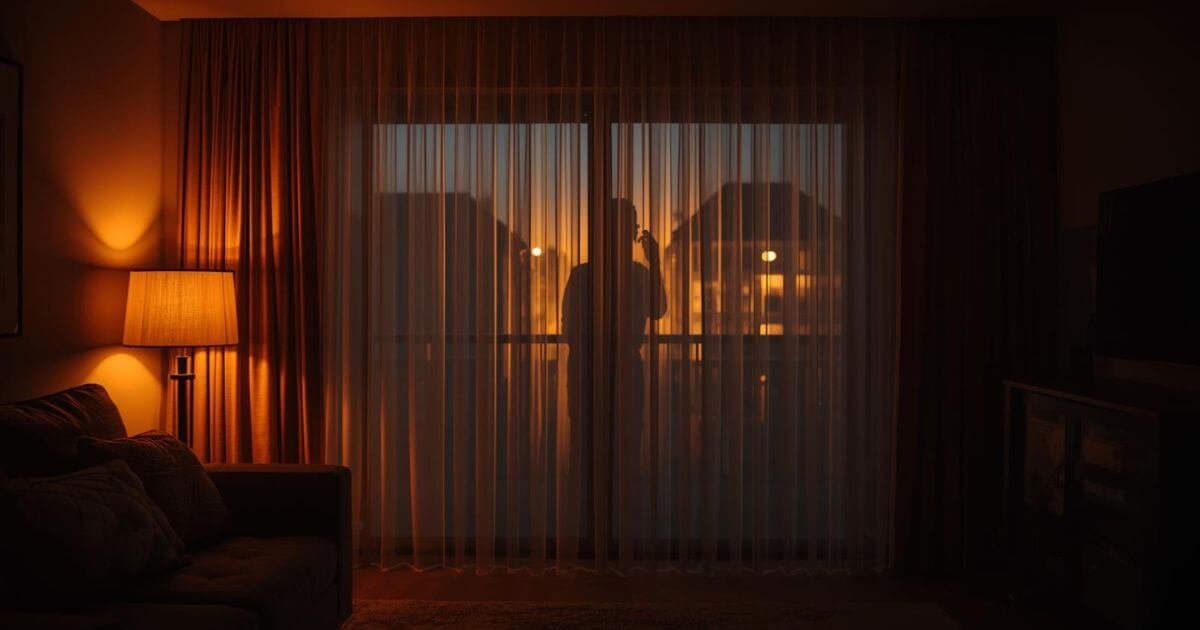
You turn on a lamp, glance at the window, and suddenly feel like you’re standing on a stage. That moment of “wait, can they actually see me?” is more common than you’d think — and it’s not just in your head.
Yes—people can sometimes see through curtains, especially at night. Whether someone can see inside depends on fabric type, curtain opacity, color, lighting contrast, distance, and angle. Sheer and light-colored curtains allow visibility, while lined, thermal, and blackout curtains block it.
That simple answer hides a lot of nuance. Many people assume any curtain equals privacy. That’s the most common mistake—and it’s why “night-time visibility shock” happens.
This post contains affiliate links. If you purchase through them, we may earn a small commission at no extra cost to you.
What “Seeing Through Curtains” Really Means
Seeing through curtains doesn’t always mean crystal-clear detail. In most real homes, it shows up as:
Silhouettes (people moving, standing, or sitting)
Shadows and outlines
Motion detection without facial detail
Partial visibility at certain angles
From outside, the human eye doesn’t need clarity to recognize activity. Movement alone can feel intrusive—especially in bedrooms or street-facing rooms.
Why Curtains Become See-Through at Night (The Lighting Rule)
The biggest factor isn’t the curtain. It’s light dominance.
Light direction theory works like this:
The brighter side becomes visible
The darker side becomes reflective
During the day:
Outdoor light is stronger
Curtains reflect light back outward
Privacy is naturally higher
At night:
Indoor lights overpower darkness outside
Curtains glow from behind
Shapes and silhouettes become visible
This contrast dominance explains why the same curtains feel “private” at noon and exposed after sunset.
Fabric Transparency: Not All Curtains Are Equal

Curtain transparency is determined by fabric density, weave tightness, and thickness.
| Curtain Type | Visibility From Outside | Privacy Level |
|---|---|---|
| Sheer / Voile | Clear shapes & movement | Very Low |
| Semi-sheer | Blurred silhouettes | Low |
| Cotton / Linen (unlined) | Limited outlines | Medium |
| Thermal / Lined | Rare visibility | High |
| Blackout | No visibility | Very High |
Key takeaway:
If light passes through easily, visibility follows.
Can You See Through Sheer Curtains at Night?
Yes—sheer curtains offer almost no privacy once it’s dark outside. Their open, loose weave is designed to let light and air through, which feels perfect during the day but works against you after sunset.
Here’s why: at night, your indoor lights become the dominant light source. That light pushes through the sheer fabric’s gaps, turning the curtain into a soft glowing screen. Anyone outside can pick up silhouettes, movement, and rough shapes—even if they can’t see fine detail.
The thinner and lighter-colored the sheer, the more you’ll be visible. A white voile panel with a bright ceiling light behind it offers close to zero privacy.
Sheers still have their place: they’re excellent for softening daylight and keeping rooms bright without sacrificing airflow. The fix isn’t to give them up—it’s to layer them, or switch to light-blocking sheer curtains, a hybrid fabric that keeps the airy sheer look while adding a tighter weave or lining for real privacy after dark. Add a blackout or thermal curtain on a second rod behind a regular sheer panel, or skip the extra rod entirely and go straight for light-blocking sheers if you want one curtain that does both jobs.
Curtain Color Matters More Than Most People Think
Color affects light transmission and reflectivity.
White & light colors reflect indoor light → higher silhouette visibility
Dark colors absorb light → reduced glow and visibility
This is why people often ask:
“Can people see through white curtains at night?”
In most homes, yes—especially with ceiling lights on.
Can Neighbors See Through Curtains in Apartments?
Apartments increase exposure because of:
Short distances between windows
Balcony and hallway angles
Multiple light sources
Even semi-sheer or medium-thickness curtains can reveal:
Standing figures
Walking movement
Bed or sofa outlines
Bedrooms face the highest privacy risk.
Day vs Night Visibility: What Changes and Why

During the day
Outdoor brightness protects privacy
Sheer curtains may feel safe
Visibility is usually minimal
At night
Indoor lighting reverses the effect
Sheer and light curtains glow
Visibility increases dramatically
If you’ve never tested your curtains at night, you’re guessing.
How to Test If Your Curtains Actually Provide Privacy

A simple real-world test most people skip:
Wait until night
Turn on your normal indoor lights
Step outside or into a hallway
View the window from different angles
If you can see:
Shapes
Movement
Shadows
Your curtains are not fully private.
Common Privacy Mistakes People Make
These mistakes cause most complaints:
Using sheer curtains alone
Choosing white curtains for bedrooms
Testing privacy only during daylight
Curtains that don’t fully cover window edges
Assuming thickness without lining is enough
Curtains are a system—not a decoration.
Sheer vs Blackout Curtains: A Clear Comparison
| Feature | Sheer Curtains | Blackout Curtains |
|---|---|---|
| Privacy at night | Poor | Excellent |
| Daylight | Maximum | Minimal |
| Silhouette blocking | No | Yes |
| Best use | Styling, daylight rooms | Bedrooms, street-facing windows |
If privacy is your priority, sheer curtains must be layered—or avoided.
How to Make Curtains More Private Without Replacing Them

If replacing curtains isn’t an option, try these fixes:
Add curtain liners (thermal or blackout)
Use double-rod layering (sheer + heavy drape)
Switch to warmer, dimmer lighting
Close gaps at the sides and top
Use darker curtain panels at night
Layering is one of the most effective and flexible solutions.
Alternatives When Curtains Aren’t Enough

Bedrooms: Where Privacy Matters Most
In high-exposure spaces, curtains alone may fall short.
| Option | Privacy | Light Control |
|---|---|---|
| Frosted window film | High | Medium |
| Roller blackout blinds | Very High | High |
| Roman shades | Medium | Medium |
| Cellular shades | High | High |
Many homes combine blinds for privacy with curtains for style.

Bedrooms are the most sensitive space because:
People change clothes
Lighting is often bright
Windows are active at night
Best options:
Thermal-lined curtains
Layered systems (blind + curtain)
If silhouettes are visible, privacy is compromised.
Living Rooms: Balancing Light and Privacy

Living rooms need flexibility.
Best approach:
Sheer curtains for daytime
Heavier drapes for night
Adjustable lighting
This preserves daylight while maintaining night-time privacy.
Buying Decision Framework: Which Curtains Do You Need?
Ask yourself:
Is the window street-facing?
Is this a bedroom or living space?
Do you use bright lights at night?
Is privacy or daylight more important?
Quick guidance:
Bedrooms → Blackout or lined
Ground floor → Dark, dense fabric
Apartments → Layered systems
Styling-only spaces → Sheer (with caution)
Cost Considerations (General Ranges)
Curtain liners: lower-cost upgrade
Blackout curtains: mid-range
Custom-lined curtains: higher-end
Liners are often the most cost-effective privacy fix.
Why Most Privacy Failures Happen at Night
Because people trust daytime appearances.
The moment indoor lighting turns on, physics takes over. Curtains don’t “fail”—they behave exactly as light allows.
Understanding this removes guesswork and embarrassment.
Discover more at Biyadecor.
FAQs
Can people see through curtains during the day?
Usually no. Outdoor light is stronger than indoor light during daytime, so curtains reflect light outward instead of glowing from behind. Sheer curtains that feel private at noon can become fully visible after dark.
Do sheer curtains give any privacy at night?
Very little on their own. Sheer and voile fabrics let both light and silhouettes pass through once indoor lights are on. Pair them with a blackout liner or a second heavier curtain for real privacy after sunset.
Can you see through curtains with a light on?
Yes — this is when visibility is at its highest. Indoor light shining outward makes curtains act almost like a projector screen, revealing shapes and movement even through medium-weight fabric.
What curtains block the most visibility at night?
Blackout and thermal-lined curtains block the most. Dark colors and tightly woven fabrics absorb and block light rather than letting it pass through, which is why they’re the top recommendation for bedrooms.
How do I know if my curtains are actually private?
Turn on your usual indoor lights at night, then step outside and look at the window from a few angles. If you can make out shapes, movement, or shadows, your current curtains aren’t fully private.